Can Fasting Reprogram Tissue Regeneration Through the Microbiome?

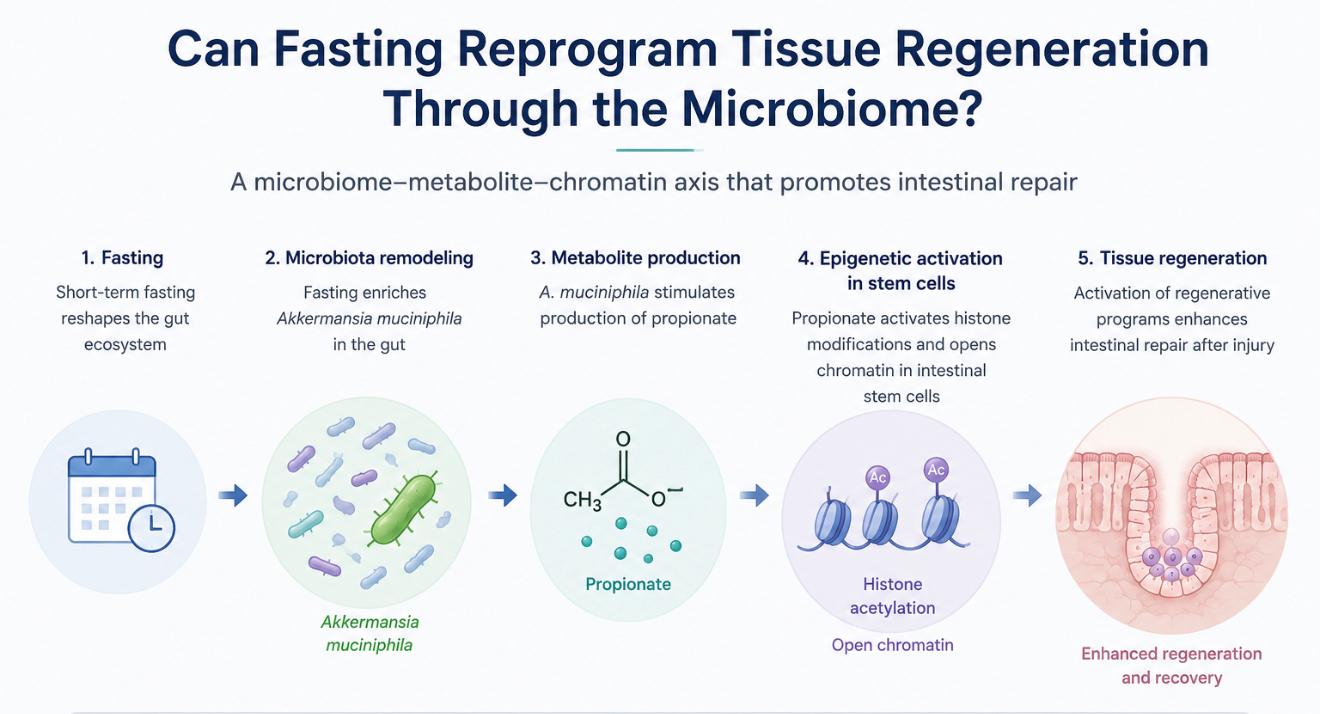
A new study published in PNAS reveals an unexpected link between fasting, the gut microbiota, and intestinal regeneration.
Researchers from the University of Texas MD Anderson Cancer Center showed that fasting promotes the expansion of Akkermansia muciniphila, leading to increased production of propionate. This microbial metabolite then activates regenerative programs in intestinal stem cells through epigenetic remodeling.
The findings describe a clear microbiome–metabolite–chromatin axis involved in intestinal repair after radiation-induced injury. Rather than acting only through systemic metabolic effects, fasting appears to reshape the gut ecosystem in a way that directly supports tissue recovery.
The study was led by Helen Piwnica-Worms, Kunal Rai, and Robert Jenq, with Praveen Barrodia as first author.
These results open new perspectives for microbiota-based strategies aimed at improving tissue resilience, reducing treatment-related toxicity, and accelerating recovery after intestinal damage.
More broadly, the work illustrates how microbiota science is moving beyond association studies toward defined mechanisms and clinically relevant interventions.
Read the full news here
Read the news on LinkedIn