Can a Common Parasite Influence Suicidal Behaviour?

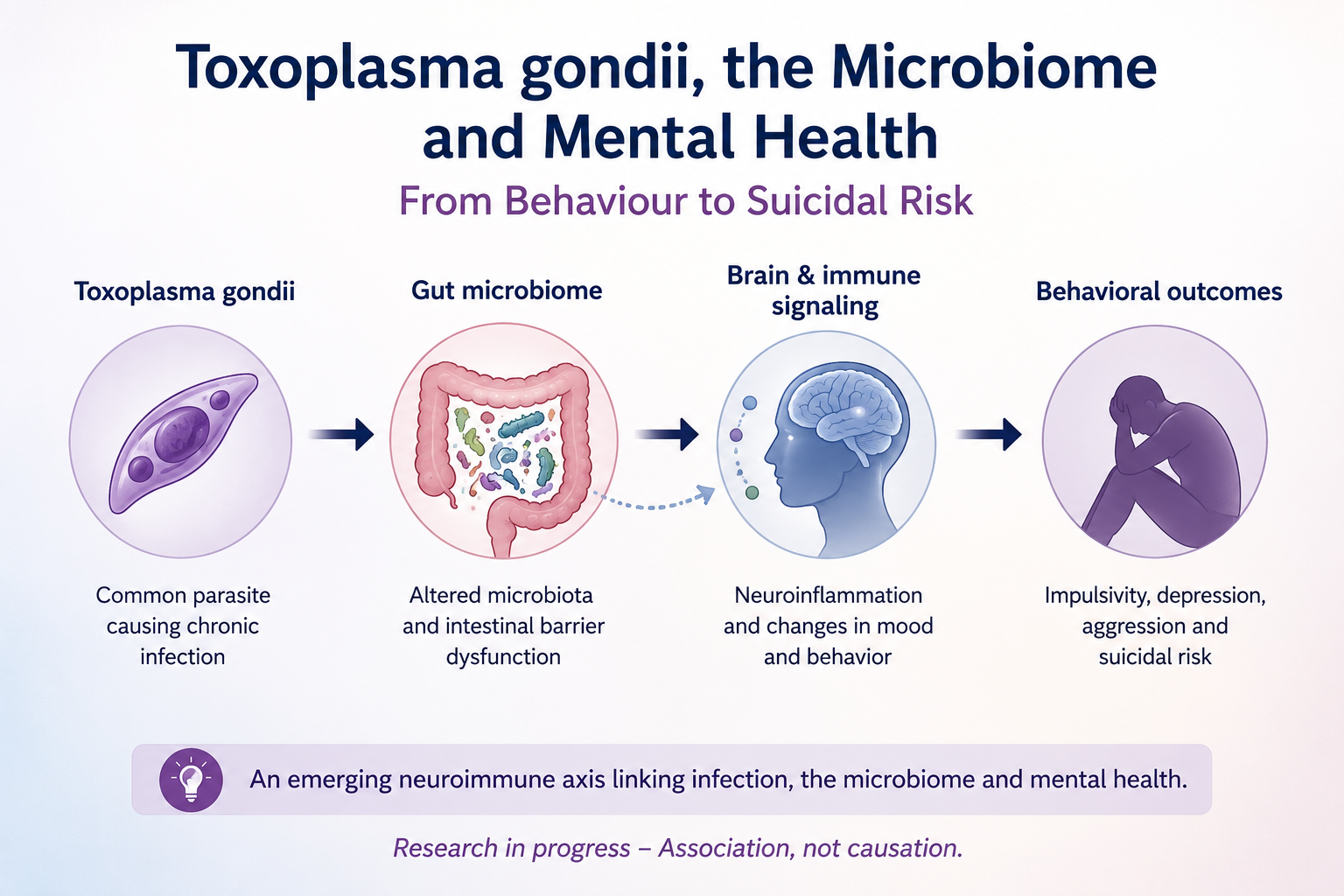
A recent paper by Prof. Teodor T. Postolache reviews nearly two decades of research examining the possible relationship between latent Toxoplasma gondii infection and suicidal behaviour.
T. gondii is a widespread neurotropic parasite capable of establishing long-term infection in the central nervous system. Studies led by Prof. Postolache and collaborators have reported associations between T. gondii IgG seropositivity or antibody intensity and suicide attempts across several populations, including patients with mood disorders, schizophrenia, recent suicide attempters and military veterans.
The paper also explores potential biological pathways linking infection to behaviour. These include chronic immune activation, altered kynurenine metabolism, neuroinflammation, changes in dopamine signalling, impulsivity, aggression and hopelessness.
However, the evidence remains mainly associative. The findings do not establish that T. gondii directly causes suicidal behaviour, and the authors emphasize the need for larger prospective and mechanistic studies.
The possible contribution of the gut microbiome adds another emerging dimension. Infection may alter intestinal microbial communities, immune signalling and microbial metabolites, but the direct Toxoplasma–microbiome–suicide pathway has not yet been demonstrated in humans.
This work opens an important discussion at the interface of microbiology, psychiatry, immunology and microbiome science:
Could chronic infection and microbial ecosystems influence vulnerability to severe psychiatric outcomes?
This topic will be discussed during the 13th World Congress on Targeting Microbiota, taking place on November 4–5, 2026, in Málaga, Spain.
Read the full news here
Read the news on LinkedIn